

Are Salmon and Fish Good for Dogs? Omega-3 Benefits, Explained
Short answer: yes. Salmon and other wild-caught fish are some of the most nutritious proteins you can put in your dog's bowl — provided they're cooked (never raw) and served without the salt, oils, and seasonings we'd add for ourselves. The reason fish gets so much attention comes down to two little molecules: the omega-3 fatty acids EPA and DHA.
Here's what they actually do, in plain language.
What omega-3s are, and why they matter
Fatty acids are the building blocks of fat, and dogs need certain ones in their diet because their bodies can't make them efficiently on their own. Most commercial dog foods are naturally high in omega-6 fatty acids (from grains and poultry fat) and comparatively low in omega-3s. That balance tips toward inflammation. Adding omega-3s — the kind concentrated in cold-water fish — helps bring it back the other way.
EPA and DHA are the two omega-3s that do the heavy lifting for dogs. Plant sources like flax contain a different omega-3 (ALA) that dogs convert to EPA and DHA very poorly, which is why fish is the gold standard. Wild salmon, steelhead, and herring are packed with EPA and DHA in the form dogs can use directly.
The benefits, backed by veterinary consensus
Skin and coat. This is the one owners notice first. Omega-3s help calm itchy, flaky skin and support a softer, shinier coat, and they're often recommended as part of managing allergy-related skin irritation. Many dogs on a steady omega-3 intake simply look glossier within a few weeks.
Joints and inflammation. EPA in particular has anti-inflammatory properties, and omega-3s are widely used to help manage the joint discomfort that comes with canine arthritis. For older or larger dogs, that's a meaningful quality-of-life benefit.
Heart health. Omega-3s play a role in regulating blood flow and inflammation, which supports overall cardiovascular function.
Brain and eyes. DHA supports proper brain and eye development in puppies, and there's evidence it may help support cognitive function in senior dogs as they age.
Kidney support. Omega-3 fatty acids are also used as part of managing chronic kidney disease in dogs, under veterinary guidance.
None of this makes fish a medicine — it's food. But it's food that happens to deliver nutrients most kibble-fed dogs could use more of.
Why wild, single-ingredient fish is the version worth feeding
There's a big difference between "salmon flavour" on a label and actual salmon in the bowl. A lot of fish-based products are mostly fillers with a spray of flavouring, or blends where the fish is one of many ingredients. You get the marketing, not the nutrition.
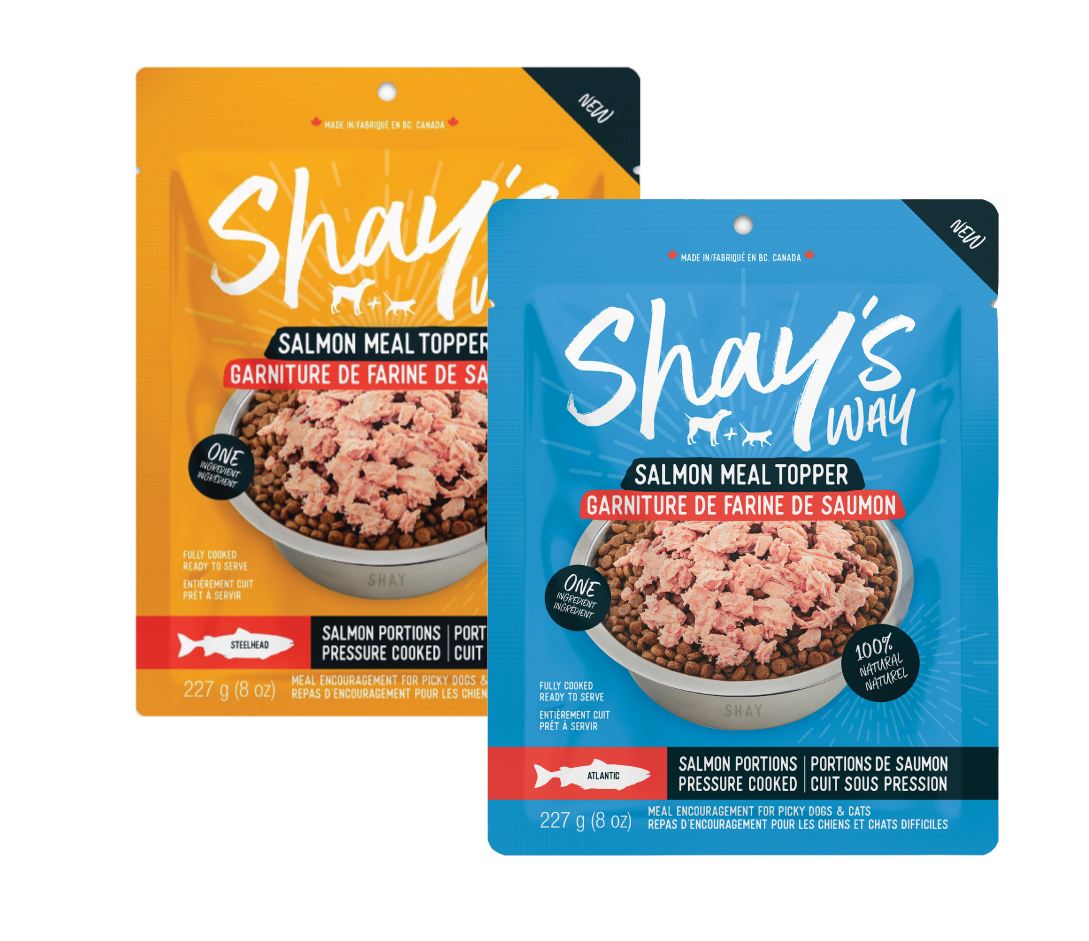
Everything at Shay's Way is the opposite: one fish, and nothing else. Wild-caught Atlantic salmon, Steelhead salmon, or Pacific herring — each topper is a single species, gently pressure-cooked so it's safe, soft, and keeps its natural nutrition intact. No fillers, no additives, no seasoning. Just the fish, from ocean to bowl.
Single-species matters for another reason: if your dog has a sensitivity, knowing exactly what's in the bowl makes it far easier to feed with confidence. There's no guessing what "fish meal" or "ocean protein blend" actually contains.
Herring deserves a special mention. It's a small, nutrient-dense fish that sits low on the food chain, which means it delivers a lot of omega-3 without accumulating the way larger predatory fish can. It's one of the ocean's most underrated proteins for dogs.
Is any fish bad for dogs?
A few sensible cautions. Never feed raw or undercooked fish — it can carry parasites and bacteria, and certain raw salmon can cause a serious illness in dogs. Cooked, single-ingredient fish sidesteps that entirely. Skip fish prepared with salt, garlic, onions, or oils. And go easy on bones unless they've been properly softened through cooking. Our toppers are pressure-cooked specifically so the fish is safe and easy to eat.
As with any addition to the diet, more isn't automatically better. Omega-3s are powerful, and very high doses aren't always appropriate for every dog, so it's worth confirming the right amount with your veterinarian — especially if your dog is on medication or a prescription diet.
How to add fish to your dog's routine
The easiest way is a daily meal topper stirred into your dog's regular food. It's a small portion, so it fits neatly within a healthy diet — we break down exactly how much by dog weight here: How Much Meal Topper to Feed Your Dog.
If you want to try it, our Meal Topper Duo Pack is a simple starting point, or browse the full topper collection to pick a fish. Real food, real ingredients — and a coat that shows it.
This article is general information, not veterinary advice. Omega-3 needs and appropriate dosing vary by dog. Talk to your veterinarian before making significant changes to your dog's diet.