

Upcycled Pet Food: What "Ocean to Bowl" Really Means
"Upcycled" is having a moment in pet food, and for once the buzzword points at something real. It describes a genuinely better way to make treats — one that's kinder to the ocean and, as it happens, delivers some of the most nutritious parts of the fish to your dog. Here's what it actually means at Shay's Way.
Upcycling, in plain terms
When fish is processed for people, we mostly want the fillet. Everything else — the skin, the frames (the skeleton and the meat still on it), the tails, the milt — is generated as a byproduct. Traditionally, a lot of that is discarded, even though it's perfectly good, highly nutritious food.
Upcycling means taking those nutritious offcuts and turning them into something valuable instead of throwing them away. It's not scraps in the negative sense — these are prized, nutrient-dense parts that other food cultures treasure. We just rescue them before they hit the waste stream and make them into treats.
The crucial point: nothing we use competes with the human food supply. We're not taking fillets away from people's plates. We're using the parts that would otherwise be wasted. Nothing wasted, nothing added.
Where each part goes
The whole fish tells a story, and almost every part of it becomes a product:
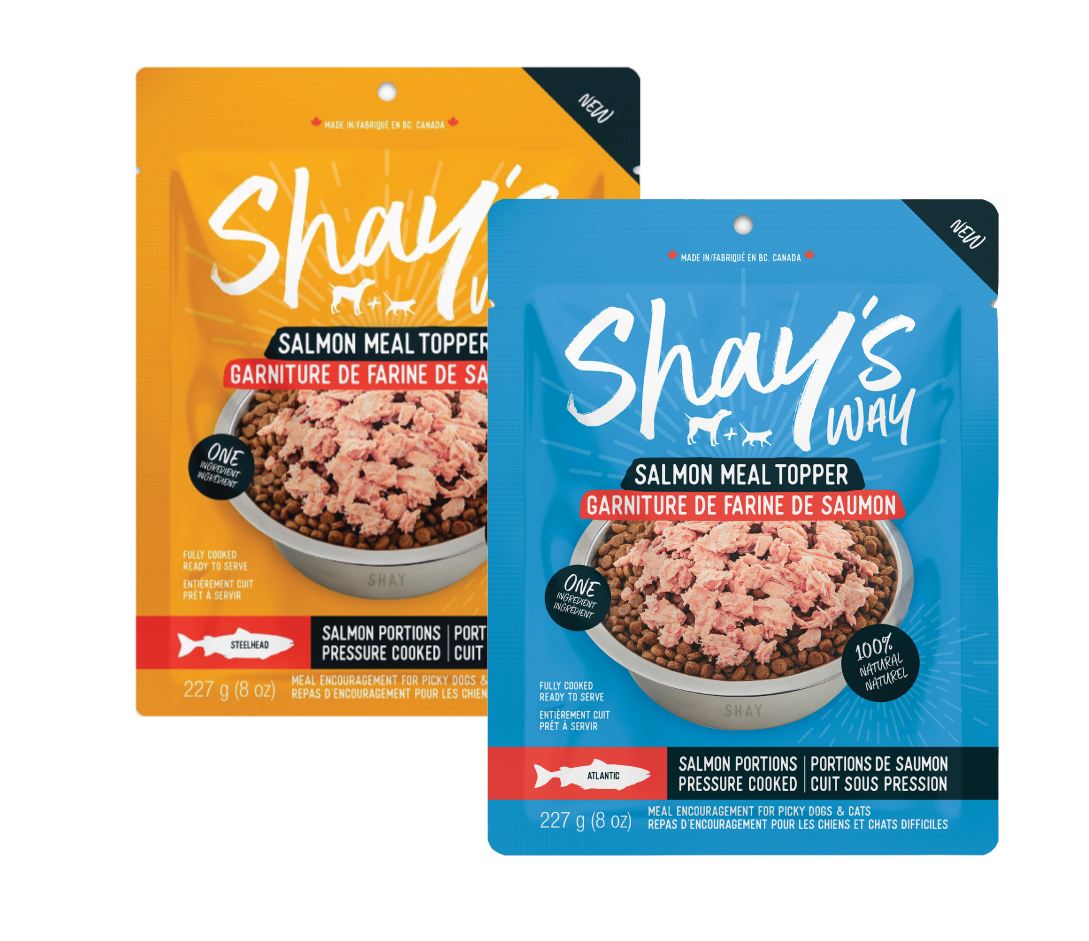
Frames → meal toppers. The skeleton and remaining meat are pressure-cooked (retort) so the bones soften into bioavailable calcium and the whole thing becomes a soft, rich meal topper. This is why our toppers are made from frames, not fillet — the frames are where a surprising amount of nutrition lives.
Skin → marine collagen. Wild Pacific cod skin is dehydrated into collagen treats — a natural source of the collagen that supports skin, coat, and joints.
Tails → split tails. Whole salmon tails are split and air-dried into a clean, digestible chew.
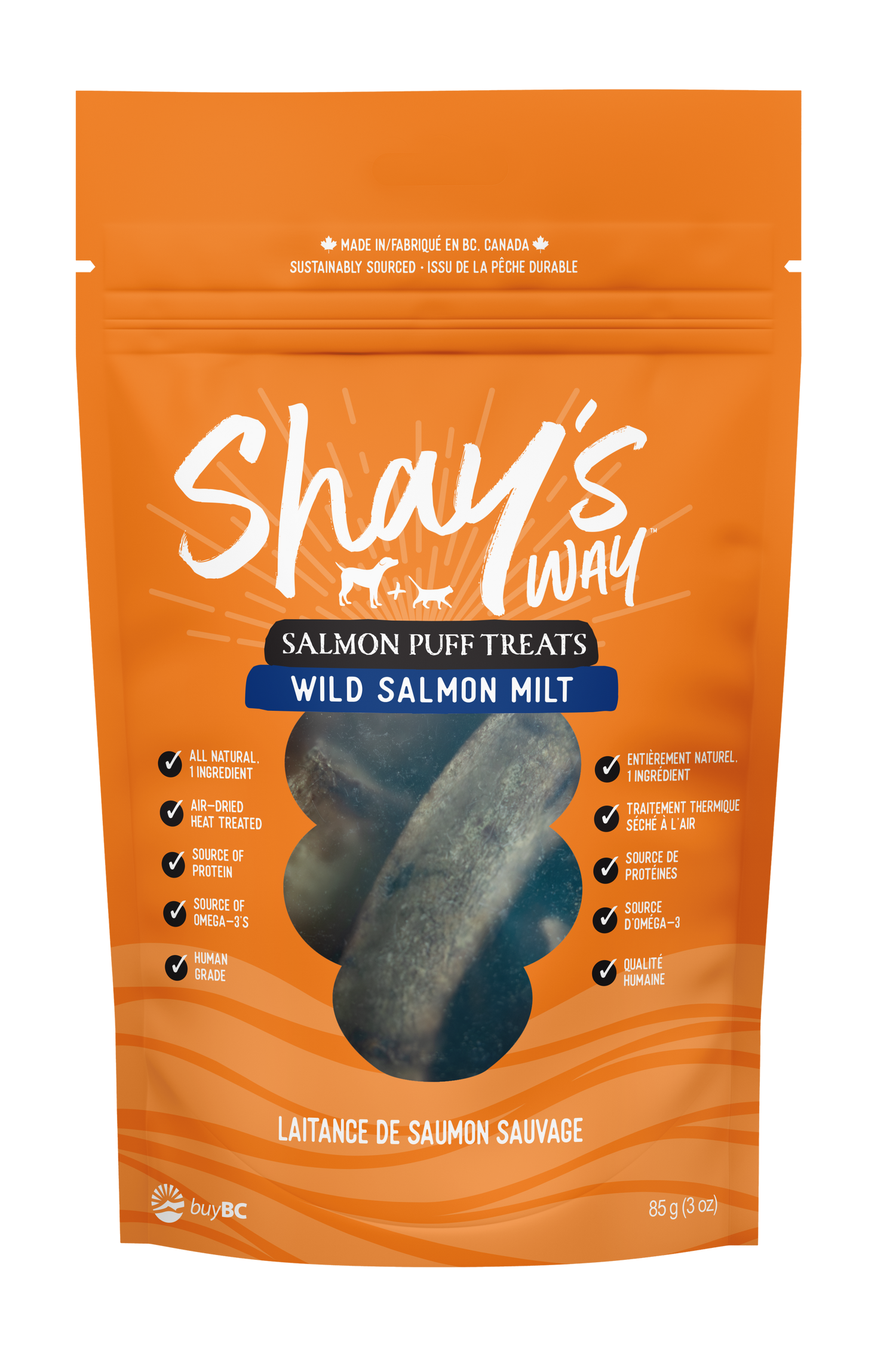
Milt → puffs. Salmon milt is dehydrated and air-puffed into a light, protein-rich training treat.
One fish, several products, almost nothing left over. You can see the full journey on our How Upcycling Works page.
Why upcycling is good for your dog
Sustainability is the headline, but the nutrition is the quiet win. Those "leftover" parts are often the most nutrient-dense pieces of the fish — frames carry minerals and calcium, skin carries collagen, milt carries protein and nucleotides. By using them, we're not compromising quality to be green; we're feeding your dog parts that are genuinely rich in the things dogs need.
And because each product is a single ingredient, you get all of that with none of the fillers or additives that dilute so much pet food. (More on why that matters: What "Single-Ingredient" Dog Food Really Means.)
Why it's good for the ocean
Fish processing generates an enormous amount of byproduct worldwide, and a lot of it is simply discarded. Every part that gets upcycled into pet food is a part that doesn't go to waste — which means more value from each fish already caught, and less pressure to catch more just to make dedicated pet-food product. It's a small idea with a big logic: use what's already here, fully, before asking the ocean for more.
How we do it responsibly
Sourcing byproduct is only half of it — handling it well is the rest. Our fish comes in fresh to our CFIA-regulated processing facility in Cloverdale, BC, where it's processed into shelf-stable treats by dehydrating, retort-cooking, or grinding. Each species is kept fully separate through the process, so a single-species label really is single-species. Then it's packaged and shipped across Canada and the US.
The bottom line
Upcycled pet food isn't a compromise — it's a smarter starting point. It rescues the nutritious parts of the fish that would otherwise be wasted, delivers real single-ingredient nutrition to your dog, and asks less of the ocean in the process. That's the whole idea behind "ocean to bowl": nothing wasted, nothing added, just the parts of the ocean that would've been thrown away, turned into something your pet gets excited about.
See exactly how it works on our How Upcycling Works page, or browse the meal toppers and collagen treats that come from it.