

Best Fish Treats for Dogs with Allergies and Sensitive Stomachs
If your dog gets itchy, breaks out in ear infections, or has an unhappy stomach that never quite settles, food could be part of the picture. Food sensitivities are common, frustrating to diagnose, and often made worse by treats with long, murky ingredient lists. The good news: fish is one of the most reliable proteins for sensitive dogs, and single-ingredient fish treats make feeding them much simpler.
How food sensitivities actually work
First, a distinction. A true food allergy is an immune response to a specific protein — most often a protein a dog has eaten a lot of over their life. A food intolerance or sensitivity is a digestive reaction rather than an immune one. Both can show up as similar symptoms: itchy skin, recurrent ear or paw issues, loose stool, gas, or general tummy trouble.
Here's the key insight: dogs become sensitized to proteins they've been exposed to. And the most common canine food allergens are exactly the proteins in most everyday dog food and treats — beef, chicken, and dairy. A dog who's eaten chicken their whole life has had the most chances to react to chicken.
That's where "novel proteins" come in.
Why fish is a smart novel protein
A novel protein is simply one your dog hasn't eaten much of before, which means their immune system hasn't had the chance to develop a reaction to it. Fish — especially wild fish like salmon, herring, and cod — is novel for a lot of dogs raised on poultry and beef. That makes it a common go-to for elimination diets and for dogs with known sensitivities.
Fish brings a bonus, too. The same omega-3 fatty acids that make it a great protein are anti-inflammatory, which can help calm the itchy, irritated skin that so often comes with allergies. So you're not just avoiding a trigger — you may be actively supporting the skin that sensitivities tend to attack. (More on that here: Are Salmon and Fish Good for Dogs?)
Why single-ingredient is non-negotiable for sensitive dogs
Here's where a lot of "fish" treats fall down. If a treat is fish plus chicken fat, plus a starch binder, plus "natural flavour," it can undo the whole point — you're trying to avoid triggers, and the treat quietly reintroduces them. For a sensitive dog, one hidden ingredient is enough to keep the itch going and leave you guessing why.
Single-ingredient treats remove the guesswork. When the label says "wild sockeye salmon" and stops there, there's nothing hidden to react to. If your dog does well, you know why. If they don't, you've ruled out one clean variable instead of untangling twenty. That's exactly the clarity an elimination approach needs — we explain the label side of it here: What "Single-Ingredient" Dog Food Really Means.
Shay's Way options for sensitive dogs
Everything we make is single-ingredient fish, which makes the whole lineup friendly to sensitive dogs:
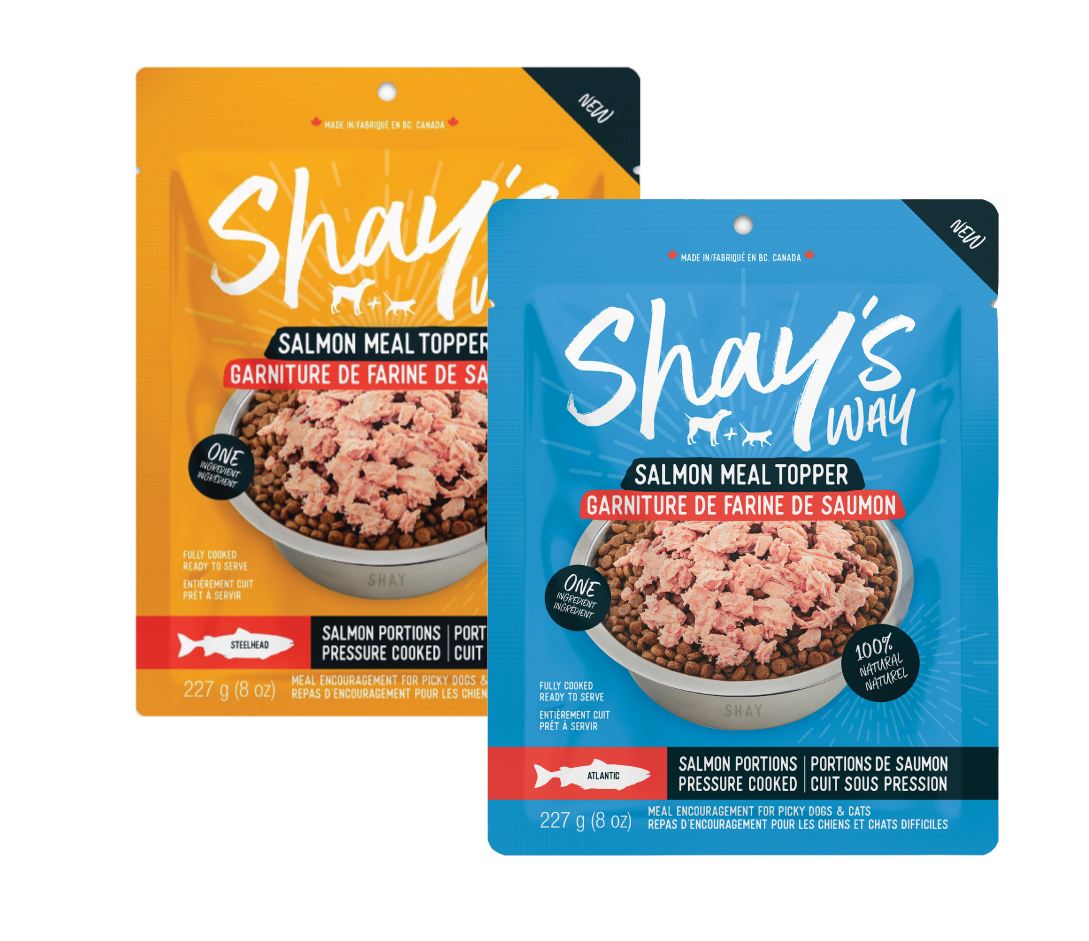
Meal toppers — one species of gently cooked fish (Atlantic salmon, Steelhead, or Pacific herring), soft and easy on the stomach, ideal for making a limited-ingredient base diet more appealing without adding triggers.
Split tails — one air-dried salmon tail, a clean chew with no rawhide, binders, or coatings.
Marine collagen treats — one ingredient, wild cod skin.
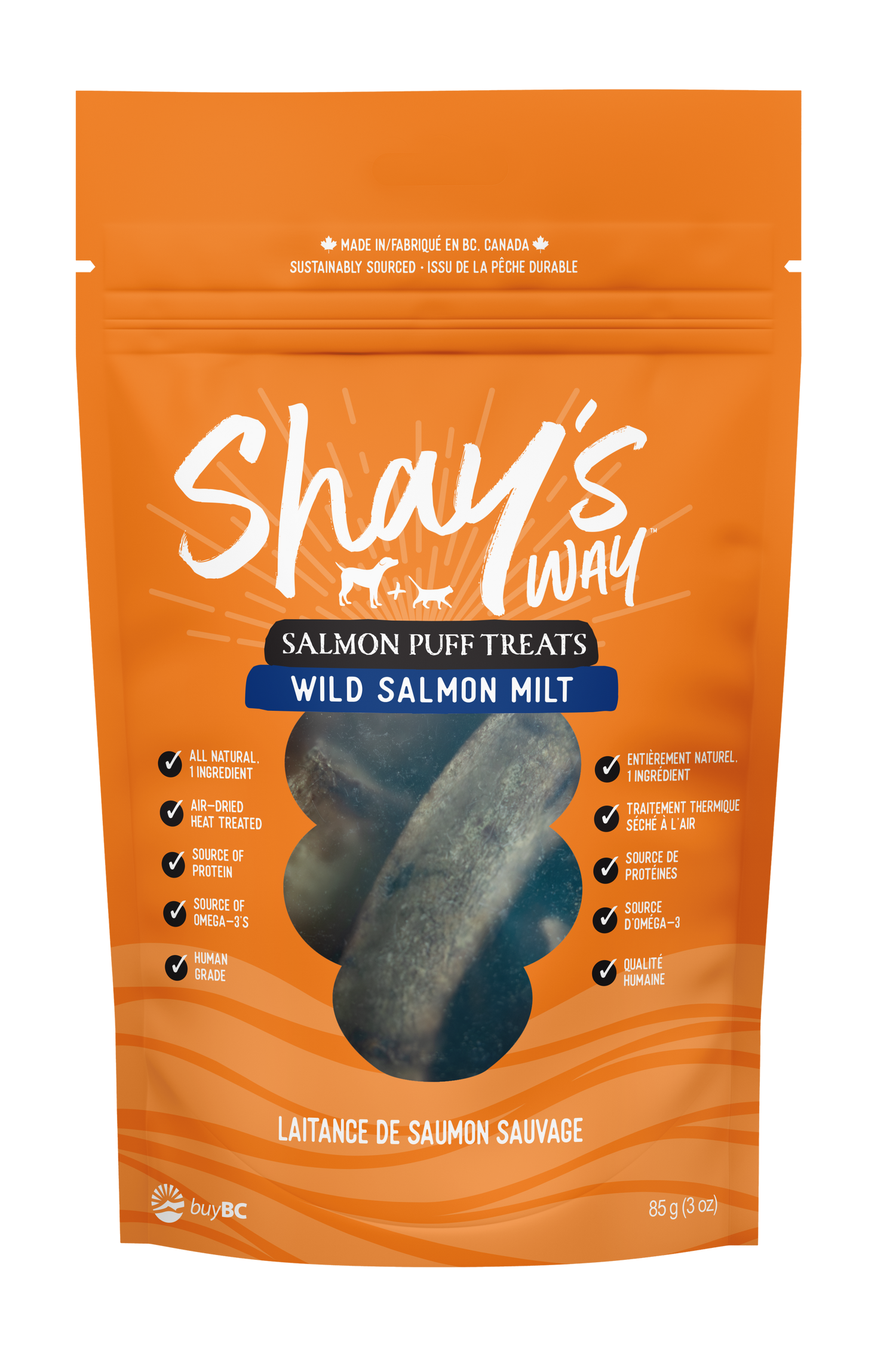
Salmon milt puffs — one ingredient, salmon milt, air-puffed into a light training treat.
Because we keep each fish species separate through processing, you can even isolate a single fish if your dog reacts to some proteins but not others.
A sensible way to introduce them
Even with a novel protein, go slowly with a sensitive dog. Introduce one new single-ingredient treat at a time, in small amounts, and give it several days before adding anything else — that way, if something doesn't agree, you'll know exactly what it was. Keep treats within about 10% of daily calories.
And an important note: if you suspect a real food allergy, work with your veterinarian. A proper elimination diet is the gold standard for pinpointing triggers, and persistent skin or stomach problems deserve a professional's eyes — they can rule out causes that have nothing to do with diet at all.
The bottom line
For an allergy-prone or sensitive dog, the best treat is usually the simplest one: a single, novel protein with nothing else in the bag. Fish checks both boxes, and adds anti-inflammatory omega-3s on top. Start clean, go slow, and let your dog show you what works.
Browse the meal topper and split tails collections — one ingredient, nothing hidden, from ocean to bowl.
This article is general information, not veterinary advice. Suspected food allergies should be diagnosed and managed with your veterinarian, ideally through a proper elimination diet.